If you would like to read any of my papers but cannot access them, please get in touch and I can send you a copy.
AI in the Criminal Justice System: From ‘AI Ethics’ to ‘Hermeneutic Risk’.
We discuss that although artificial intelligence is increasingly used in the criminal justice system, it brings “hermeneutic risk” meaning the danger that AI systems reason in ways that humans cannot properly interpret as truthful and warns that without transparency, validation, and human oversight, AI could undermine rather than strengthen forensic and legal decision-making.
Link to paper in Medicine, Science and the Law (2025)
Joint ISFRI/IAFR position statement-IMAGE Acquisition
This position statement sets out that forensic imaging must be performed by appropriately trained and competent practitioners, with clear standards for education, legal awareness, radiation protection, and professional governance to ensure that images used as evidence are reliable and defensible in court.
Link to paper in Forensic Imaging (2025)
Comparing imaging modalities and healing criteria for the estimation of fracture age: A systematic review
Here we are looking at what imaging modalities are used for fracture aging. We found that current methods for estimating the age of bone fractures rely mainly on 2D radiography with inconsistent criteria and limited validation, highlighting the need for more objective approaches and the potential of advanced imaging such as micro-CT.
Link to paper in International Journal of Legal Medicine (2025)
What is the lived experience of people affected by cancer, family members, and their treatment team engaged in Patient Initiated Follow-Up (PIFU) in cancer care: A qualitative systematic review
This qualitative systematic review explores how cancer patients, families, and healthcare professionals experience patient-initiated follow-up (PIFU), finding that it can empower and benefit many people when well supported, but must be carefully tailored to individual needs and levels of health confidence.
Link to paper in Seminars in Oncology Nursing (2025)
To Sell or Not to Sell: The British Association for Biological Anthropology and Osteoarchaeology’s Position on the Trade and Sales of Human Remains in the UK
Is selling human remains okay? This paper outlines how a professional task force in the UK is actively monitoring and challenging the online and offline sale of human remains, arguing that current legislation is inadequate and calling for stronger ethical and legal protections to prevent the commodification of the dead.
Link to paper in Historic Environment: Policy & Practice (2025)
Using micro-CT imaging for triaging evidence in a vehicle fire investigation. A case report
This case report demonstrates how high-resolution micro-CT imaging was used to rapidly triage burnt evidence from a car involved in a homicide, allowing investigators to identify relevant items, rule out others, and manage resources more effectively.
Link to paper in The Police Journal: Theory, Practice and Principles (2025)
New rites, local lives: strontium isotope analysis of cremated human remains from the Late Iron Age cemetery at Westhampnett, West Sussex, UK
This study uses strontium isotope analysis of cremated remains from the Late Iron Age cemetery at Westhampnett to show that, despite strong cultural links to continental Europe, the buried individuals were overwhelmingly local rather than migrants.
Link to paper in Journal of Archaeological Science: Reports (2025)
The Impact of Urbanisation on Growth Patterns of Non-Adults in Medieval England
This study shows that medieval children growing up in urban England often experienced poorer skeletal growth than those in proto-urban or rural settings, reflecting the health challenges of crowded living conditions, infection risk, and variable access to nutrition
Link to paper in International Journal of Osteoarchaeology (2024)
The Use of Micro-CT in the Investigation of a Case Involving 3D Printed Firearms
This case report shows how micro-CT imaging was used to non-destructively examine two suspected 3D-printed hybrid firearms, helping experts understand their internal mechanisms and viability before test-firing and presenting the complex evidence clearly in court
Link to paper in Forensic Science International (2024)
The benefit of micro-CT in a forensic examination of a fatal case child abuse and court presentation: A case report
This case report shows how high-resolution micro-CT imaging was used alongside histopathology to visualise and present complex injury evidence in court, helping a jury understand the pattern and timing of fractures in a fatal child abuse investigation.
Link to paper in Science & Justice (2024)
Patient experiences of patient-clinician communication among cancer multidisciplinary healthcare professionals during ‘breaking bad news’: A Qualitative Systematic Review
This qualitative systematic review synthesises evidence from 28 studies to show that patients’ experiences of “breaking bad news” in cancer care are shaped by empathy, clarity, timing, and individualised communication from multidisciplinary healthcare professionals.
Link to paper in Seminars in Oncology Nursing (2024)
Book Chapter 22 Forensic Imaging
This chapter explores how forensic imaging requires radiographers to balance highly technical, legally robust image acquisition with sensitive, person-centred care for both living and deceased patients and their families, across situations ranging from suspected child abuse to post-mortem investigations.
Patient centered care in radiology. CRC Press (2024)
Can latent fingerprint disclose the sex of the donor? A preliminary test study using GS-MS analysis of latent fingerprints
This study tested whether the chemical composition of latent fingerprints, analysed using GC–MS, can reveal the sex of the donor, and found that two specific alcohol compounds showed statistically significant differences between males and females.
Link to per in Journal of Forensic Sciences (2023)
Morphological and metric description of a rare Mesolithic deciduous tooth from Train Creek Caves, Alaska
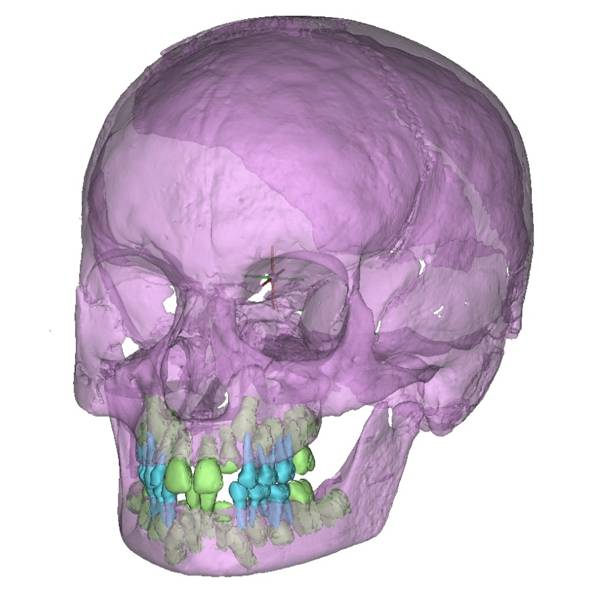
This paper presents the morphological and metric analysis of a single 8,085-year-old deciduous upper central incisor from Trail Creek Cave, Alaska, belonging to a child genetically identified as part of an ancient Beringian population related to early Native Americans.
Link to paper in Dental Antropology Journal (2023)
The status of forensic radiography in the Nordic Countries: Results from the 2020 IAFR questionnaire
Radiography is a field that is becoming more and more used within forensic case work and this paper examines where we are in the Nordic countries in regards to this developing area.
Link to paper in Forensic Imaging (2022)
Raising awareness of osteopetrosis
Osteopetrosis is a rare disease where bones have an abnormal growth becoming hardened and brittle. This paper discuss the different forms of the disease, diagnosis, medical imaging and treatment of patients with osteopetrosis.
Imaging and Therapy Practice, February 2021.
What are the unmet supportive care needs of men and their loved ones affected by penile cancer? A systematic review of the empirical evidence
Penile cancer is a rare cancer that suffers from lack of research compare to more common forms of cancers. This study looks at what needs are not meet by those men living with penile cancer.
Link to paper in European Journal of Oncology Nursing (2020)
Bone Scan in men with intermediate and high-risk prostate cancer: What next?
When determining what treatment is necessary for prostate cancer, it is imperative to know if the cancer of the individual has metastasised. The most common form of diagnostic imaging for this is a bone scan also called a scintigraphy. Sometimes a bone scan cannot determine if the cancer has spread. This study looks at how individuals are then assessed and what treatment they are given.
Link to paper in Seminars of Oncology Nursing (2020)
Experiences of unmet need and access to supportive care for men receiving androgen deprivation therapy for prostate cancer: A Bi-national Study
This study investigates men on hormone therapy for prostate cancer and what needs they are experiencing by current health care provision. Comparisons are made between men in the UK and in Australia.
Reference to paper in Seminars of Oncology Nursing (2020)
What are the experiences of men affected by prostate cancer participating in an ecological momentary assessment study?
Ecological momentary assessment (EMA) is a method used in health services research where a participant repeatedly reports on behaviors, symptoms, and cognitions as they occur in real time in the participant’s natural environment. This study looks at how the participants themselves experience this method.
Link to paper in Cancer Nursing (2020)
The population history of northeastern Siberia since the Plaistocene
The human migration during the “Late Pleistocene” (126,000 to 11,700 years ago) is examined from genomic material from northeastern Siberian.
Link to paper in Nature (2019)
Temporal changes in childhood health during the medieval Little Ice Age in Denmark
During the Medieval Period in Denmark the Little Ice Age started. This study examines the consequences from the skeletal remains from two cemetery collections.
Link to paper in The International Journal of Paleopathology (2019)
A tale of two cities: A comparison of urban and rural trauma in Medieval Denmark
This study looks at the difference between two Danish medieval skeletal populations. The differentiation is examined between an urban and rural population from patterns of trauma arising from economy and occupation.
Link to paper in International Journal of Paleopathology (2019)
Early Human Dispersals Within the America
To understand how humans diverged and spread across North and South America, this paper analysed ancient human genomes more than 10.000 years old from Alaska to Patagonia.
Link to paper in Science (2018)
A pilot randomised controlled trial of a multimodal supportive care (ThriverCare) intervention for managing unmet supportive care needs in men with metastatic prostate cancer on hormonal treatment and their partner/caregiver
Treatment of metastatic prostate cancer can have a negative effect on the quality of life. Here we determine the effectiveness of a multimodality supportive care intervention to meet unmet supportive care needs for men and their partner/caregivers.
Link to paper in European Journal of Oncology Nursing (2018)
Estimating subadult age: diaphyseal length
This chapter discusses ageing archeological skeletal material of children from their length of long bones. Advantages and disadvantages are discussed with suggestion of appropriate methods.
Link to chapter in The Encyclopaedia of Archeological Sciences (2018)
Childhood health as reflected in an adult urban and rural sample from medieval Denmark
In this study, childhood health evaluated in adult skeletons are examined from two cemetery populations from the Danish Medieval Period. One population is urban and the other population is rural.
Link to paper in HOMO (2018)
Development of a prehabilitation multimodal supportive care interventions for men and their partner/caregivers prior to radical prostatectomy for localised prostate cance
Removal of the prostate in men can cure cancer if contained to the prostate. This paper examined when the optimum time to introduce self-rehabilitation from surgery could be introduced.
Link to paper in Cancer Nursing (2018)
A qualitative study exploring models of supportive care in men and their partners/caregivers affected by metastatic prostate cance
This paper explore the experiences of patients with metastatic prostate cancer and their partners/caregivers, as well as an healthcare team, with a nurse-led multimodality supportive care intervention.
Link to paper in Oncology Nursing Society (2017)
Pre-Christian cult sites. Beliefs and rituals in the late Iron Age and Viking Age
Rituals and beliefs from the Viking Period is told from the archeological perspective, from excavations of ritual sites containing human and animal sacrifices.
Link to book chapter in Vikings: Warriors from the Sea (2017)
CT imaging vs. traditional radiographic imaging for evaluating Harris Lines in tibiae
Can sign of biological stress in the long bones be examined from CT images? This paper explores this question in comparison to the traditional method of using x-ray images.
Link to paper in Anthropological Anzeiger (2016)
A method for estimating age of medieval sub-adults from infancy to adulthood based on long bone length
When ageing of archeological child skeletons can not be performed from the more precise method of dental ageing – this paper offer a method for ageing based on length of long bones for children from birth until fully grown.
Link to paper in American Journal of Physical Anthropology (2016)
A ritual site with sacrificial wells from the Viking Age at Trelleborg, Denmark
This study examines the Viking Fortress called Trelleborg in Denmark and the sacrificial wells found within the circular military structure. Two of the sacrificial wells contained remains of children and animals.
Link to paper in Danish Journal of Archeology (2015)
Body surface area determined by whole-body CT scanning: Need for new formulae?
BSA estimations are important for many areas of clinical medicine, such as standardization of physiological parameters like cardiac output and renal glomerular filtration rate and calculation of drug dosages. Here, comparison between BSA obtained from post-mortem whole-body CT scans and BSA calculated by nine predictive formulae to assess for accuracy.
Link to paper in Clinical Physiology and Functional Imaging (2015)
A test of inter- and intra-observer error for an atlas method of combined histological data for the evaluation of enamel hypoplasia
Biological disturbances during childhood can be seen as evidence on dental enamel. This study tests a method for assessing the age of occurrence of the biological stress.
Link to paper in Journal of Archeological Science: Reports (2015)
A method for estimating age of Danish medieval sub-adults based on long bone length
When ageing of archeological child skeletons can not be performed from the more precise method of dental ageing – this paper offer a method for ageing based on length of long bones for children over the age of six years.
Link to paper in Anthropologischer Anzeiger (2012)